Dover Vigilante Group Vows Return If Police Fail to Act
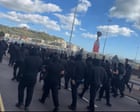
Dover Vigilante Group Threatens Further Disruptions
The emergence of masked, black-clad Dover vigilantes has sparked serious concerns among political leaders and civil rights advocates who warn that further demonstrations could occur if police enforcement measures remain insufficient. The group's ability to mobilize and coordinate large-scale blockades at critical infrastructure points has raised alarms about the effectiveness of current law enforcement strategies in addressing organized activism.
Who Are the Dover Vigilantes?
The black-clad Dover vigilantes have claimed responsibility for blocking access to major routes in the port town, with the group identifying itself as Patriot Platform, an anti-immigration organization with documented connections to far-right movements. The organization presents itself as a patriotic force driven by what it describes as an unwavering "fierce love for our homeland," though critics contest this characterization and point to its extremist associations.
Campaign Leadership Warns of Escalation
Nick Lowles, founder of Hope Not Hate, a prominent counter-extremism organization, has directly attributed the group's capacity to mobilize at significant scale to what he characterizes as persistent police inaction. According to Lowles and other campaigners, the lack of decisive law enforcement response has inadvertently emboldened far-right linked organizations to continue planning demonstrations.
Political Response and Concerns
Multiple politicians have expressed alarm regarding the incidents, noting that without enhanced police intervention and prevention strategies, the black-clad Dover vigilantes are likely to return. The blockades have disrupted normal operations at one of the United Kingdom's most critical ports, affecting commerce and public access to essential infrastructure.
Implications for Public Order
The situation highlights a broader challenge facing law enforcement agencies: balancing the protection of free speech and assembly rights with the prevention of organized disruptions targeting key national infrastructure. When masked protesters coordinate large-scale actions, authorities face questions about whether their response mechanisms are adequately calibrated to address such mobilizations.
The Role of Far-Right Activism
Organizations operating under the banner of anti-immigration activism have demonstrated an increasing ability to organize visible demonstrations. The connection between such groups and broader far-right movements remains a focal point for scrutiny by civil society organizations dedicated to monitoring extremism and countering hate movements across the country.
Enforcement and Prevention Strategies
Law enforcement officials face mounting pressure to develop more effective strategies that prevent future blockades while respecting constitutional protections for legitimate protest activity. The challenge intensifies when dealing with organized groups that deliberately obscure their identities through the use of masks and coordinated black-clad appearances, making individual accountability more difficult to establish.
Advocates argue that enhanced intelligence gathering, community engagement, and preventive measures targeting known activist networks could reduce the likelihood of recurrence. However, these approaches must be implemented carefully to avoid allegations of discriminatory profiling or excessive surveillance.
Looking Forward
As communities and authorities assess lessons learned from the Dover incidents, the underlying tension between preventing disruption and protecting democratic freedoms remains unresolved. The black-clad Dover vigilantes' stated willingness to mobilize again underscores the urgency of developing comprehensive responses that address both immediate security concerns and the underlying factors that fuel far-right activism in the region.