Spain's Prime Minister Holds Traffickers Accountable for 60,000 Migrants
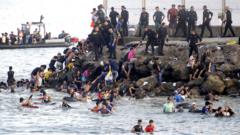
Spain's Government Response to Mass Migration Surge
Spain's Prime Minister addressed the unprecedented arrival of 60,000 migrants reaching the Spanish enclave of Ceuta from Morocco, attributing responsibility to organized traffickers operating across North African routes. The dramatic influx highlighted ongoing challenges in managing irregular migration flows and prompted swift government intervention alongside international diplomatic responses from neighboring countries.
The Migration Crisis Unfolds
The 60,000 migrants who reached Ceuta represented a significant surge in cross-border movement, overwhelming local infrastructure and drawing immediate attention from Spanish authorities. According to official statements, the majority of these individuals had successfully returned to Moroccan territory by Friday evening, suggesting coordinated efforts to manage the situation and prevent a sustained humanitarian crisis within Spanish jurisdiction.
Government Accountability Measures
Spain's leadership emphasized that human trafficking networks, rather than individual migrants, bore primary responsibility for orchestrating this mass movement. Traffickers exploit vulnerable populations by promising opportunities across European borders, profiting substantially from dangerous journeys across the Mediterranean and through land routes. The government's focus on traffickers underscored a strategic approach distinguishing between victims of exploitation and criminal organizations facilitating illegal border crossings.
International Diplomatic Consequences
The migration surge triggered immediate diplomatic repercussions within the European Union. Italy responded by suspending its Schengen agreement on free movement with Spain, a significant step reflecting tensions over border management and migration policy harmonization across European nations. The Schengen zone traditionally permits unrestricted movement between member states, making suspension a notable enforcement mechanism.
Italy's Position on Border Control
Italy's decision to suspend the Schengen agreement with Madrid signaled growing frustration with Spain's capacity to manage its southern borders effectively. This suspension represented a bilateral dispute within the broader European context, where member states increasingly grapple with balancing open borders against national security and resource constraints. Such measures underscore diverging approaches to immigration policy across Mediterranean nations.
Root Causes and Structural Challenges
The surge of 60,000 migrants reflects systemic issues affecting North African regions, including economic instability, political uncertainty, and limited opportunities driving emigration. Morocco, as the primary departure point, faces pressure managing populations seeking better conditions abroad. Traffickers capitalize on these circumstances, marketing false narratives about European opportunities to generate demand for their services.
Trafficking Networks Operating Mechanisms
Organized criminal groups operate sophisticated networks coordinating transport, documentation, and routing of migrants. These operations generate substantial profits while exposing participants to extreme dangers including drowning, exploitation, and violence. Law enforcement efforts targeting traffickers remain essential, though success requires international cooperation and intelligence sharing among affected nations.
Spain's Border Management Strategy
Spanish authorities implemented rapid response protocols managing the arrival of 60,000 migrants, prioritizing registration, health screening, and orderly return processes. The successful return of most individuals to Morocco by Friday evening demonstrated operational capacity despite the extraordinary numbers involved. This response reflected coordination between Spanish border agencies, local governments in Ceuta, and Moroccan counterparts.
European Union Border Management
Spain's experience highlights ongoing challenges within EU border management frameworks. The union's external borders require robust oversight preventing unauthorized crossings while respecting humanitarian obligations toward asylum seekers. Migration pressure on Mediterranean and land routes continues testing European collective responses and individual member state capacities.
Looking Forward: Policy Implications
The incident involving 60,000 migrants reaching Ceuta necessitates comprehensive policy review addressing migration governance at European and international levels. Increased investment in trafficking investigations, enhanced border security technologies, and coordinated development assistance to origin countries represent potential components of holistic strategies. Additionally, improved information sharing between EU members concerning border challenges could facilitate more cohesive responses.
Spain's government continues prioritizing public safety and orderly migration management while addressing root causes driving unauthorized movement. The suspension of Schengen protocols with Italy underscores that singular nation responses prove insufficient, requiring sustained multilateral engagement addressing migration comprehensively.